
Kitchen countertops in Chicago: choosing the right surface
Quartz, granite, laminate or solid surface? Compare how each handles heat, stains and daily use, then pick an edge and color that suit your new cabinets.
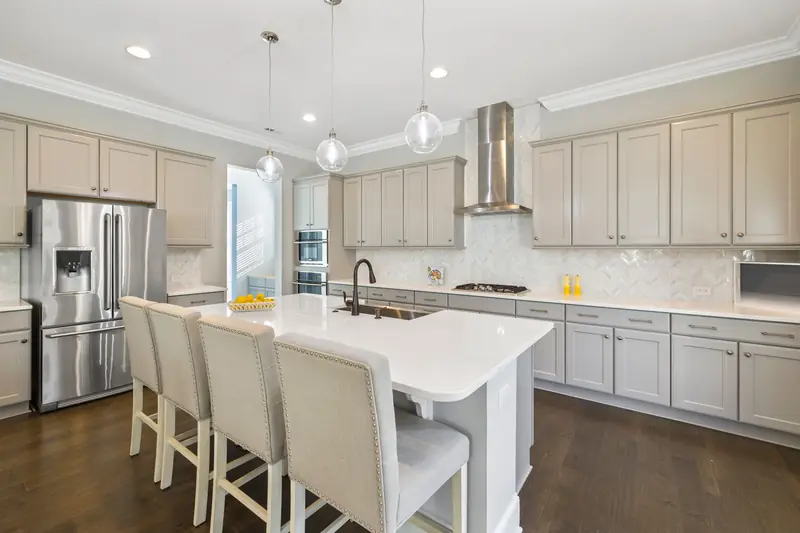
Picking a countertop for your refaced kitchen
The countertop is the second-largest surface in the kitchen after the cabinet doors, and the one that takes the most abuse. We install kitchen countertops in Chicago homes, across the suburbs and in Wisconsin in four materials: quartz, granite, laminate and solid surface. Each has a clear place, depending on how you cook, how much upkeep you’ll accept and what you want to spend.
When you reface at the same time, the new tops are templated after the cabinets are refaced, so they fit the finished cabinets exactly. Stone takes about 7–10 days to fabricate after templating, and installation usually takes a day. Our countertop installation page covers the work itself; this page is about choosing.
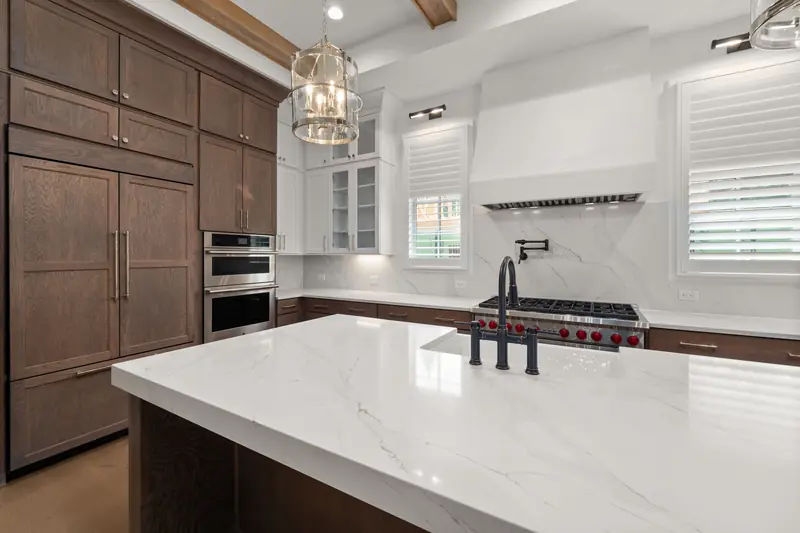
Countertop materials compared
No material wins every row. The right one is the best match for how you use your kitchen.
| Quartz | Granite | Laminate | Solid surface | |
|---|---|---|---|---|
| What it is | Engineered stone: ground quartz bound with resin | Natural stone cut from a quarried slab | Printed layers bonded to a wood-based core | Acrylic or polyester resin with mineral fillers |
| Durability | Very hard; resists scratches and chips | Very hard; resists scratches | Can scratch or chip; seams can swell if water gets in | Softer; scratches can be sanded out |
| Heat | Moderate; resin can scorch, so use trivets | High; handles hot pans, though trivets are still wise | Low; hot pans can scorch or blister it | Moderate; use trivets |
| Maintenance | Non-porous; never needs sealing | Needs periodic sealing; how often depends on the stone | Wipe clean; no sealing | Non-porous; no sealing |
| Look | Consistent color, including marble-look veining | One-of-a-kind patterns; every slab differs | Wide range of prints, including stone and wood looks | Solid colors and subtle patterns with nearly invisible seams |
| Sink options | Undermount or drop-in | Undermount or drop-in | Usually drop-in | Undermount, drop-in or integrated |
| Relative cost | $$–$$$ | $$–$$$ | $ | $$ |
Relative cost is a general guide; slab choice, edge profile and thickness all move the price. Your written quote itemizes the material you choose.
Thickness and overhangs
A few measurements affect both the look and whether the top needs extra support.
-
3 cm stone
About 1¼" thick and the standard for quartz and granite in most kitchens. It sits directly on the cabinets and looks substantial without extra edge work.
-
2 cm stone
About ¾" thick. On kitchen counters it usually needs a plywood subtop or a built-up edge so it doesn’t look thin; it’s more common on vanities and backsplashes.
-
Laminate and solid surface
Laminate tops are typically around 1¼"–1½" thick including the core. Solid surface is a thinner sheet supported underneath, with a built-up front edge.
-
Island overhangs
Counter-height seating needs about 15" of knee space. Stone overhangs beyond roughly 10" generally need hidden steel supports or corbels.
Pairing countertops with door finishes
Bring a door sample when you choose a countertop. Seeing the two side by side settles most decisions in minutes.
White and light painted doors
- Warm white quartz keeps an all-white kitchen from feeling cold
- Soft gray or gold veining adds movement without busyness
- Dark granite or black quartz gives strong contrast
- Match undertones: warm with warm, cool with cool
Wood and stained doors
- Let one surface lead: busy grain wants a quiet countertop
- Cream and soft white quartz suit cherry and oak
- Charcoal or black tops ground lighter maple
- With granite, look for flecks that pick up the wood tone
Navy, green and dark doors
- White or warm white quartz keeps dark cabinets from feeling heavy
- Marble-look quartz is a classic match for navy
- Brass hardware ties dark doors and light tops together
- Skip very dark tops on very dark doors unless the room is bright
When butcher block makes sense
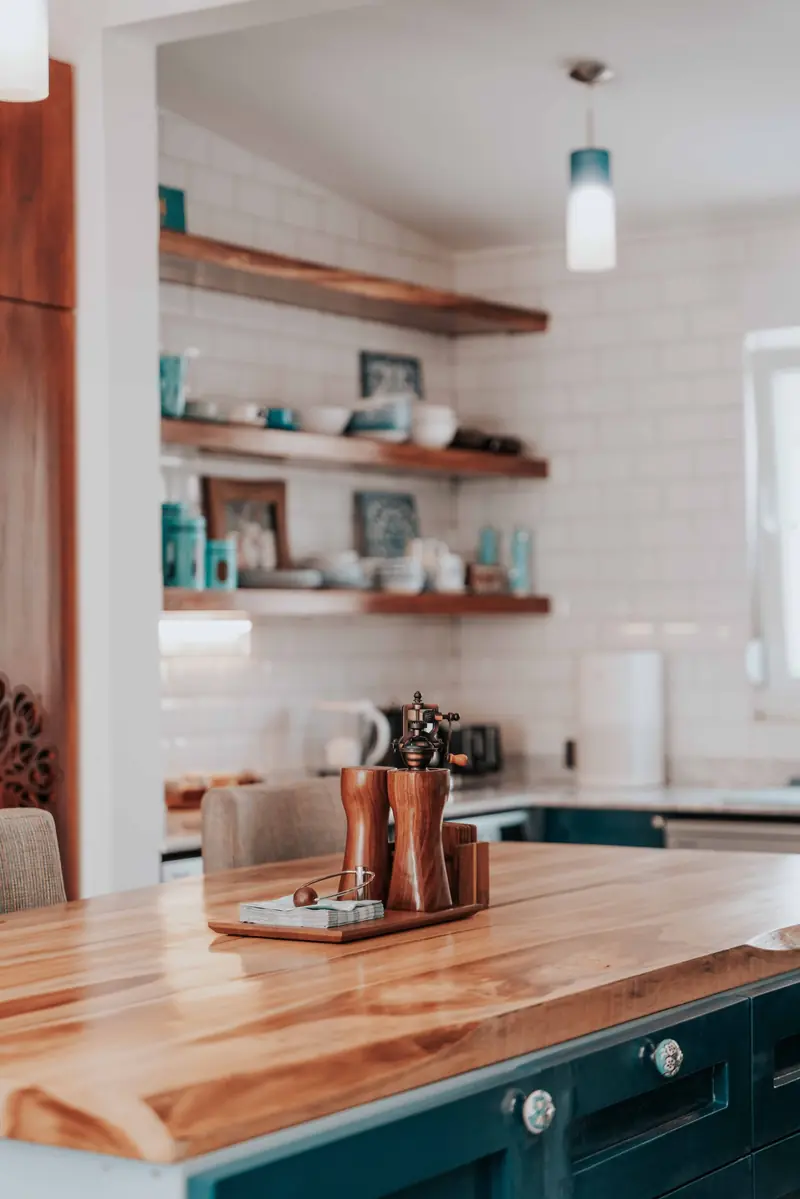
Butcher block isn’t one of the four surfaces we install, but homeowners often ask about it, and it can work well in the right spot. That spot is usually an island: a wood top warms up a kitchen full of painted cabinets and stone, and it’s kind to knives when you use it for prep.
Wood needs more care than any other surface. Plan on oiling it about monthly at first, wiping up water quickly and keeping it away from the sink, where standing water can stain or warp the boards. The upside is that scratches and stains can be sanded out.
If you’re considering wood on the island and stone on the perimeter, mention it at your consultation so the island cabinets and finish can be planned around it.
Countertop questions
Have a question we didn’t answer? Call (630) 555-0140 or send us a note.
Which countertop is best for a busy family?
Quartz is the easiest to live with: it resists stains and scratches and never needs sealing. Granite is just as tough and handles heat better, but needs periodic sealing. If budget comes first, laminate holds up well as long as you use cutting boards and trivets.
Is quartz or granite better?
Both are excellent. Choose quartz for consistent color, marble-look patterns and no sealing; choose granite for the natural variation of real stone and better heat resistance. Many people decide after seeing large samples in person.
Can I keep my existing sink with a new countertop?
Sometimes, if it’s a drop-in sink in good condition that suits the new cutout. Many homeowners switch to an undermount sink with quartz or granite, since crumbs wipe straight in. See kitchen sinks for the options.
How long does a new countertop take?
The countertop is templated after your cabinets are refaced. Stone fabrication takes about 7–10 days after templating, and installation usually takes about one day.
Do I need a new backsplash too?
Not always. Removing an old countertop can damage the bottom row of a tile backsplash, so many people replace both at once. A new backsplash usually takes 1–2 days.
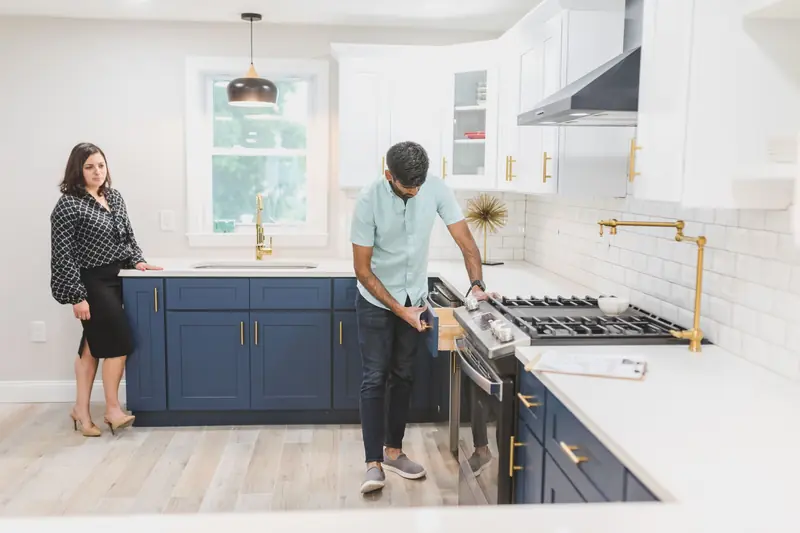
See your kitchen with new doors before you commit
A designer comes to your home with door samples, finishes and hardware, measures your cabinets and leaves a written, itemized quote. It’s free, and there’s no pressure to decide that day.
- Tell us a little about your kitchen
- Pick a time for your in-home design visit
- New doors installed in 3–5 days