
Kitchen cabinet doors in Chicago, made to fit your cabinets
Choose the style, material and finish. We make the doors and drawer fronts to your measurements and install them on the cabinet boxes you already have.
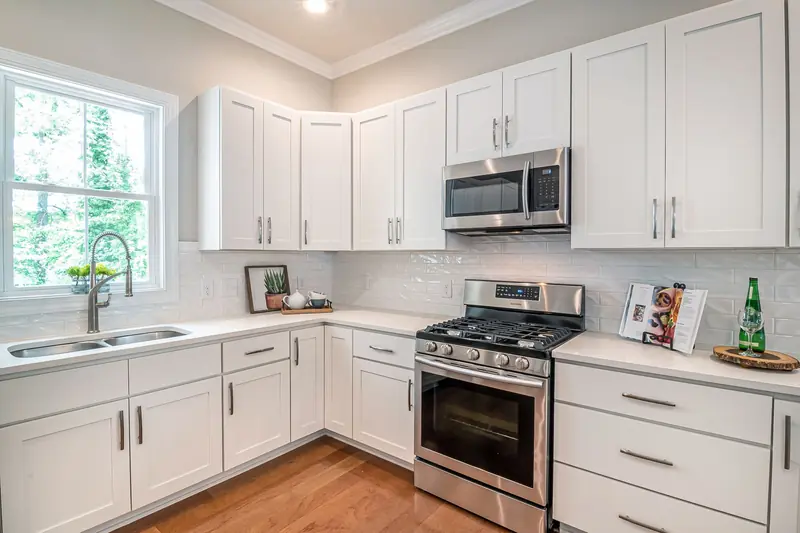
The part of the kitchen you see most
Doors and drawer fronts cover most of the visible cabinet surface, so they decide how your kitchen reads from across the room. When you reface with Refacello, we make new kitchen cabinet doors for your Chicago-area home to the exact size of each opening, then cover the exposed frames and end panels with matching veneer.
You make three main choices: the door style, the material and the color or stain. Then come the details, like edge profiles, glass fronts and drawer fronts.
Doors are made to order after a precision measure, with a lead time of about 4–6 weeks. Installation then takes 3–5 days for a typical kitchen.
Three door styles
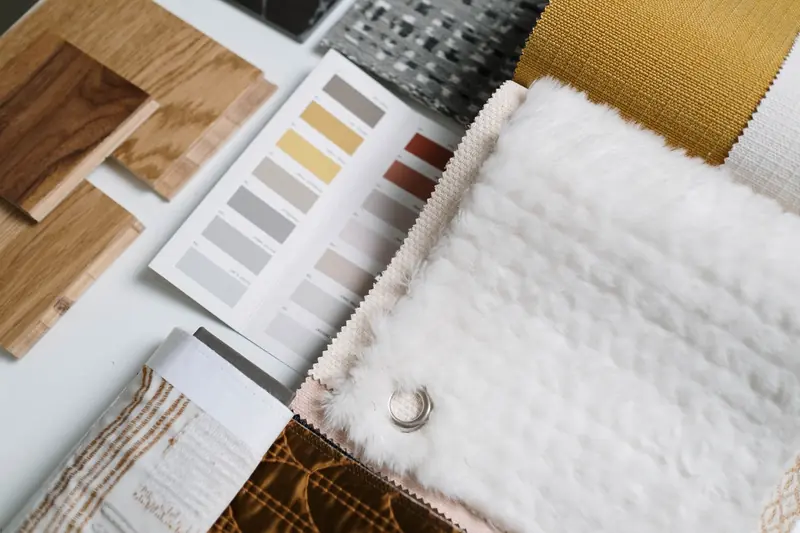
Every door falls into one of three families, and the difference is in the center panel. For a deeper side-by-side, read Shaker vs. flat vs. raised panel doors.
-
Shaker (recessed panel)
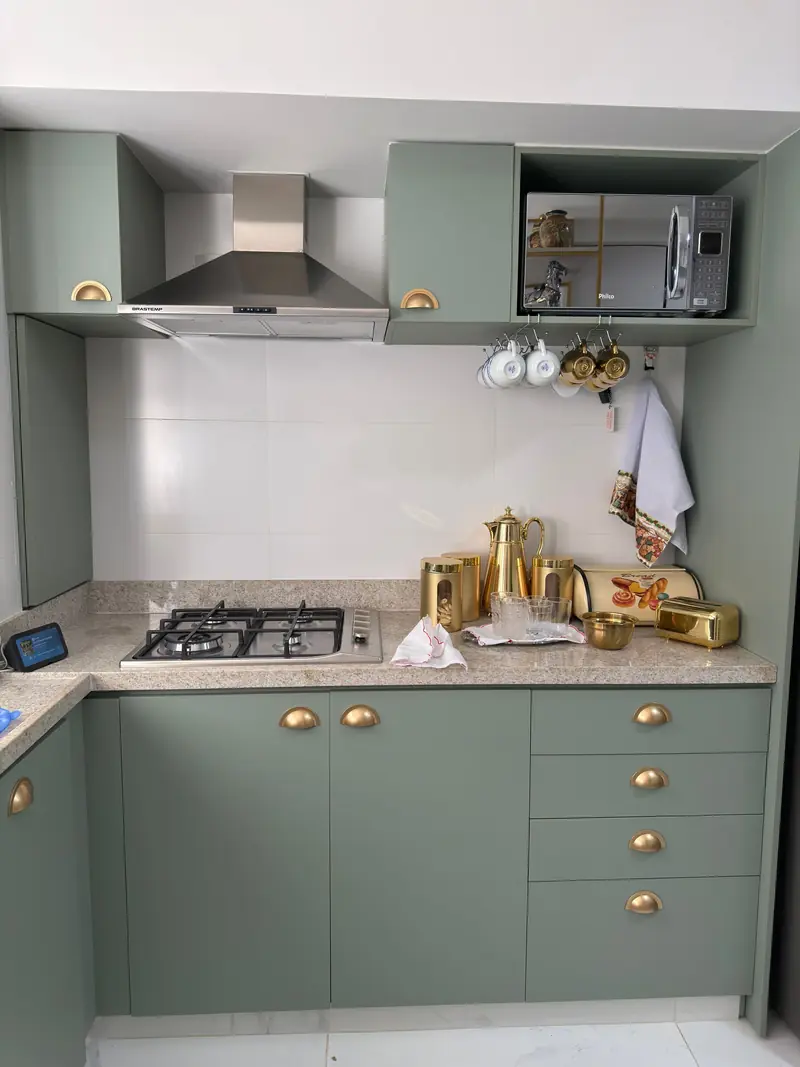
A flat center panel set inside a square five-piece frame. Its plain lines suit almost any house and the flat panel wipes clean easily, which is why it has been America’s most popular door for years.
Best for: transitional, farmhouse and classic kitchens
-
Raised panel
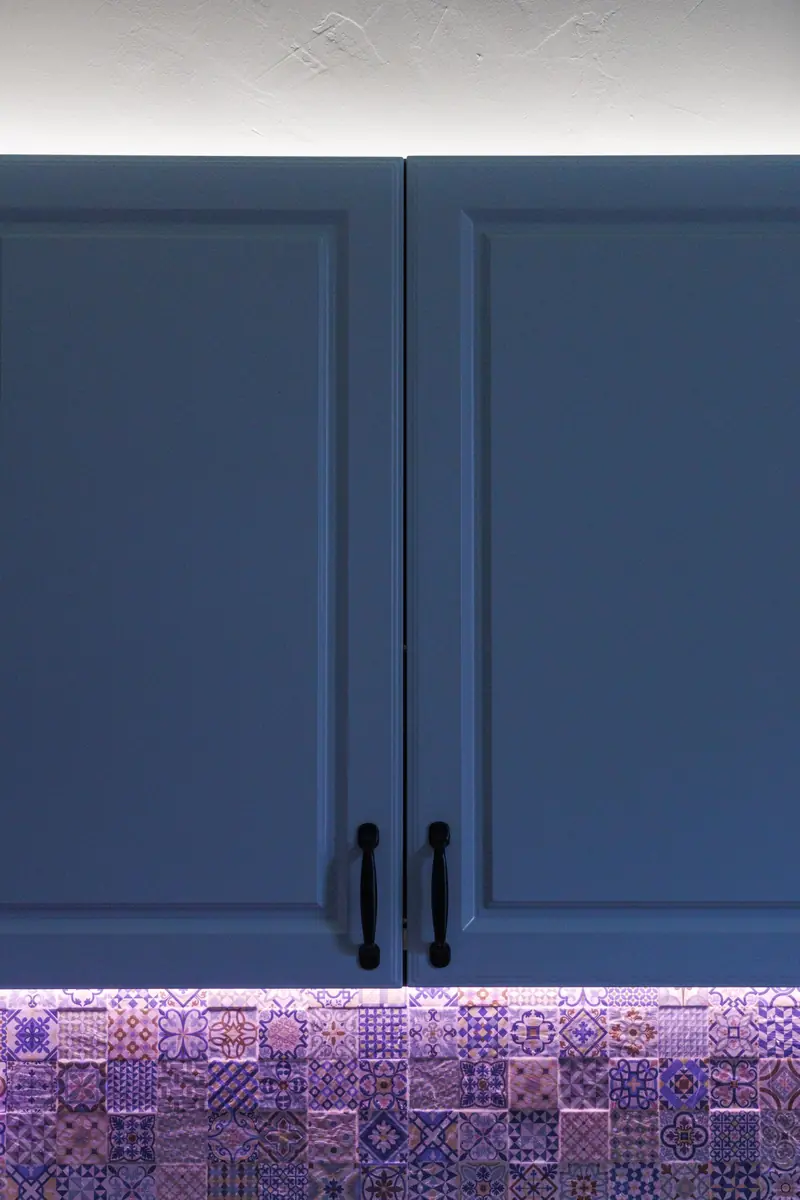
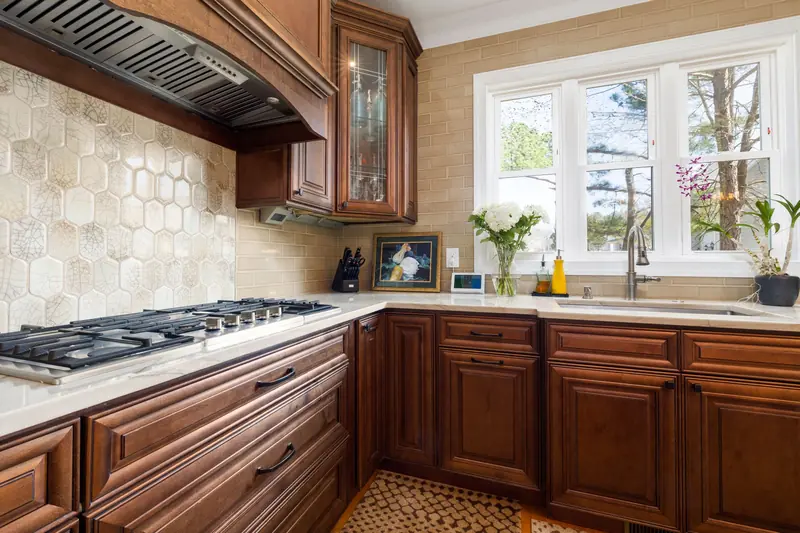
The center panel is shaped so it rises toward the middle, with a profiled edge that catches light and shadow. It reads as formal and traditional, and it pairs naturally with crown molding and stained wood.
Best for: traditional kitchens and detailed millwork
-
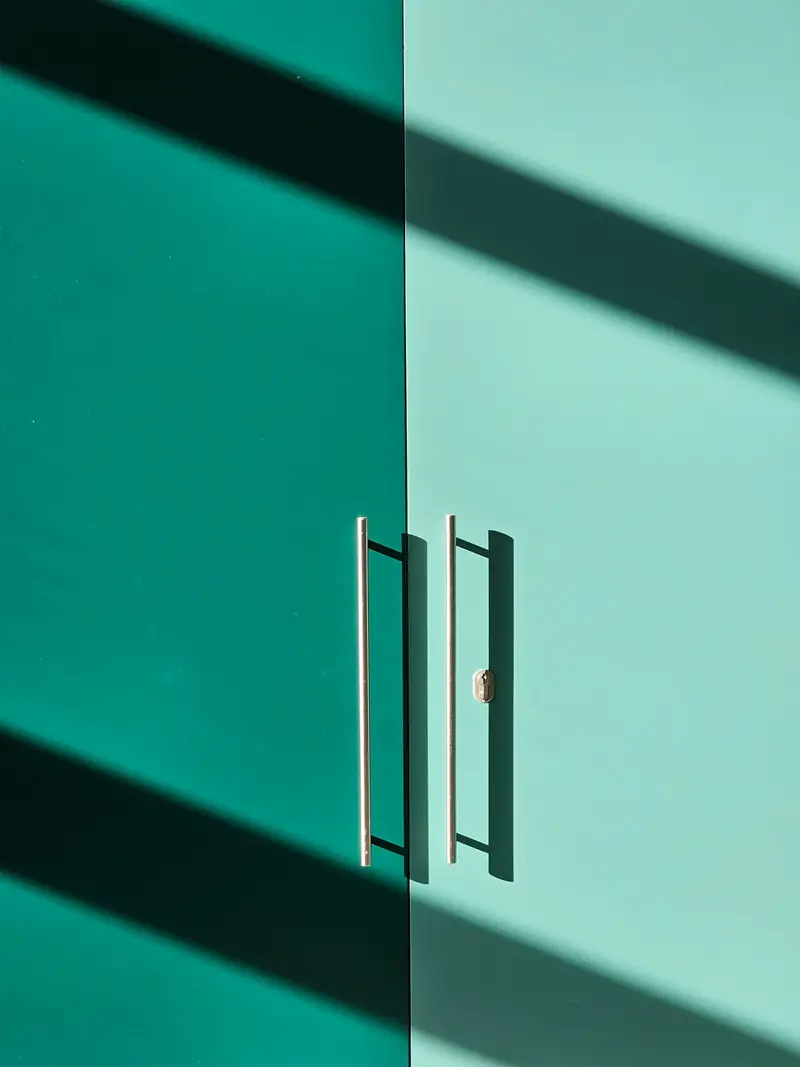
Flat panel (slab)
One flat piece with no frame. Slab doors put the attention on color, wood grain and hardware, and with no grooves or edges to collect grease they’re the easiest door to keep clean.
Best for: modern, mid-century and minimalist kitchens
Door materials compared
Style is the shape of the door; material is what it’s made of and how it’s finished. All three hold up to daily family use when they’re cared for properly.
| Rigid thermofoil (RTF) | Wood veneer | Painted | |
|---|---|---|---|
| What it is | A vinyl film heat-formed over a dense MDF core | A thin layer of real maple, cherry, oak or walnut over a stable core | A factory-sprayed paint finish over a smooth, stable door |
| Look | Solid colors and wood-grain prints, matte to high gloss | Natural grain that varies from door to door | Smooth, solid color in almost any shade |
| Moisture and stains | Very good; the face is one piece with no joints | Good once finished; wipe up spills promptly | Good; wipe up spills promptly |
| Heat | Can peel or discolor near sustained heat; a heat shield is recommended beside ovens | Handles normal kitchen heat well | Handles normal kitchen heat well |
| Wear over time | Holds its color; deep damage means replacing the door | Scratches can be touched up; cherry darkens naturally with light | Chips can be touched up; fine lines may show at frame joints as wood moves with the seasons |
| Relative cost | $ | $$ | $$–$$$ |
Relative cost is a general guide. Your written quote itemizes the exact material and finish you choose.
Choosing a color or stain
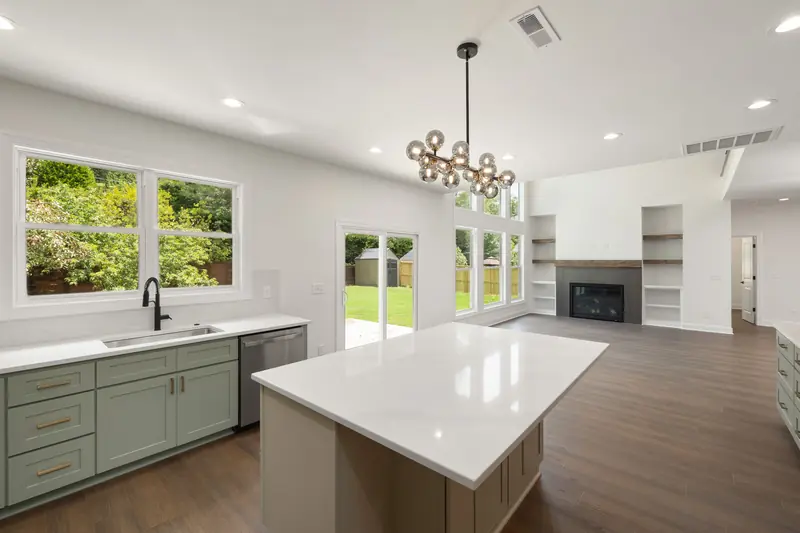
Painted and thermofoil doors come in dozens of colors, from bright whites and warm off-whites to grays, greige, sage green, navy and near-black. Wood veneer comes in a range of stains, and the species matters as much as the stain: oak shows a strong open grain, maple is smooth and even, cherry deepens to a warmer red-brown over its first months in the light, and walnut is naturally dark and richly figured.
Look at samples in your own kitchen, not only in a showroom. Chicago and Wisconsin kitchens get very different light in December than in July, and a white that looks warm in summer can turn cool on a gray winter morning.
Two-tone kitchens add depth: a darker or wood-toned island or base run with lighter wall cabinets keeps the room bright and hides scuffs near the floor.
- Hold samples next to the floor and countertop you’re keeping
- Check them in daylight and under evening lights
- Choose whites by undertone: warm, cool or neutral
- Coordinate stain with wood floors rather than matching exactly
Details that finish the door
Smaller choices that change how the doors look up close.
-
Edge profiles
The outside edge of a door can be square, lightly eased, beveled or shaped into a classic ogee. Square and eased edges look modern; ogee and bevel edges suit raised panel doors.
-
Glass-front doors
Swapping a few solid upper doors for glass breaks up a long wall of cabinets. Pairs on either side of a window or range hood are a common choice.
-
Glass types
Clear glass shows everything, so it suits a tidy display. Seeded, frosted or reeded glass softens the view and hides a mixed collection of dishes.
-
Drawer fronts
Drawer fronts follow the door style. Shallow top drawers often get a slab front even in a Shaker kitchen, because a full frame on a 5- or 6-inch front looks cramped.
-
Frames and end panels
Cabinet frames and exposed sides are covered with veneer that matches your new doors, so the old finish doesn’t show.
-
Added cabinets
Adding a pantry or an island while refacing? Its doors and panels are made in the same style and finish.
Matching the door style to your home’s era
The best door usually echoes the trim, windows and interior doors already in your house. These pairings are a starting point, not a rule.
Bungalows, Tudors and older homes
- Shaker or a simple raised panel matches period woodwork
- Painted cream, sage or deep green suits the era
- Stained oak or cherry works where original trim is still wood
- Glass-front uppers echo old built-in china cabinets
Ranches and split-levels (1950s–1970s)
- Slab doors fit the low, horizontal lines
- Walnut or warm wood-grain finishes feel true to the period
- Shaker in a current color works if the house has been updated
- Long, slim pulls keep the look clean
Colonials and newer homes (1980s on)
- Shaker is the flexible choice for open layouts
- Raised panel fits formal colonials with crown molding
- Two-tone finishes keep a large kitchen from looking uniform
- Slab doors in wood grain or gloss suit a modern update
Cabinet door questions
Have a question we didn’t answer? Call (630) 555-0140 or send us a note.
What’s the most popular kitchen cabinet door style?
Shaker, the recessed panel door, has been the most common choice for years because it suits traditional, transitional and modern rooms alike. Slab doors are popular in modern kitchens, and raised panel remains the classic choice for formal, traditional homes.
Is thermofoil a good material for kitchen cabinet doors?
Rigid thermofoil is durable, consistent in color and very easy to clean, and it’s usually the most budget-friendly option. Its weak spot is sustained heat, so doors right next to an oven or a toaster oven need a heat shield or some clearance.
Why not just paint my existing doors?
Painting keeps the old door style and any damage under the paint. Refacing gives you new doors in the style you want, with matching veneer on the frames and a lifetime limited warranty on doors and drawer fronts for the original homeowner.
Do new doors come with new hinges?
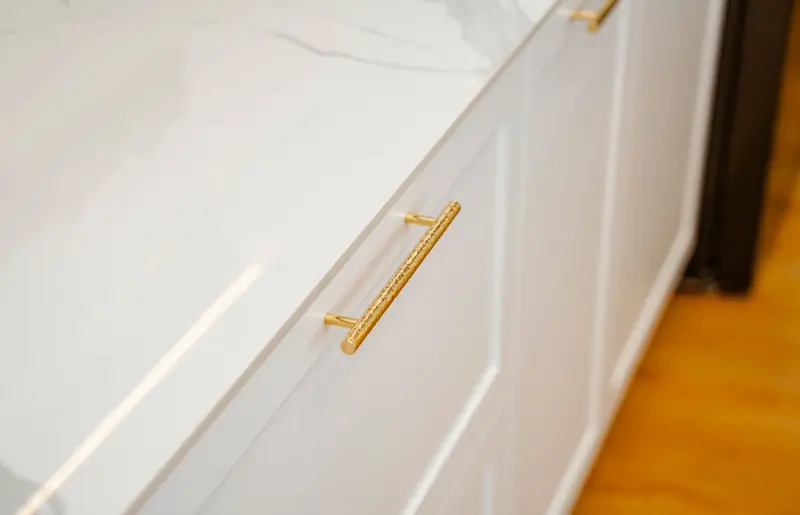
Yes. New hinges are installed with every refacing job, and soft-close hinges are available so doors shut quietly. See cabinet hardware for hinge and pull options.
How long do new cabinet doors take?
Doors and drawer fronts are made to order after the precision measure, so plan on about 4–6 weeks before installation. The install takes 3–5 days for a typical kitchen, and you can keep using the kitchen through most of it.
See your kitchen with new doors before you commit
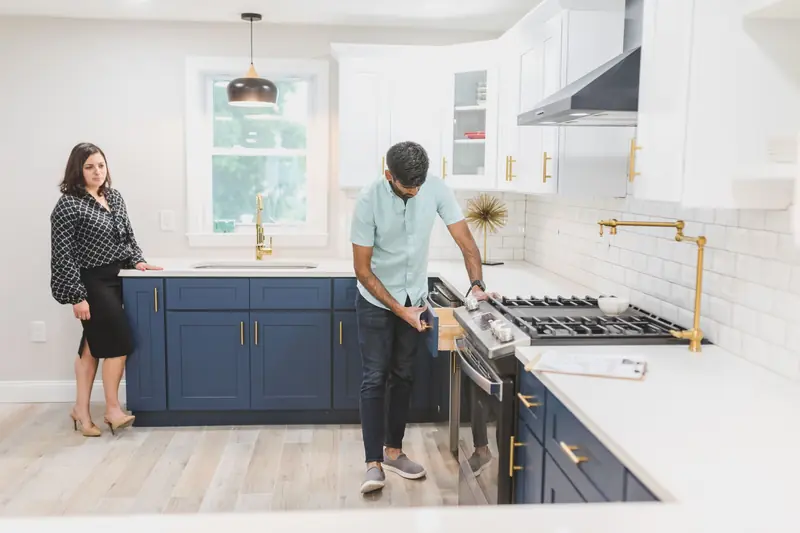
A designer comes to your home with door samples, finishes and hardware, measures your cabinets and leaves a written, itemized quote. It’s free, and there’s no pressure to decide that day.
- Tell us a little about your kitchen
- Pick a time for your in-home design visit
- New doors installed in 3–5 days